German Cockroaches
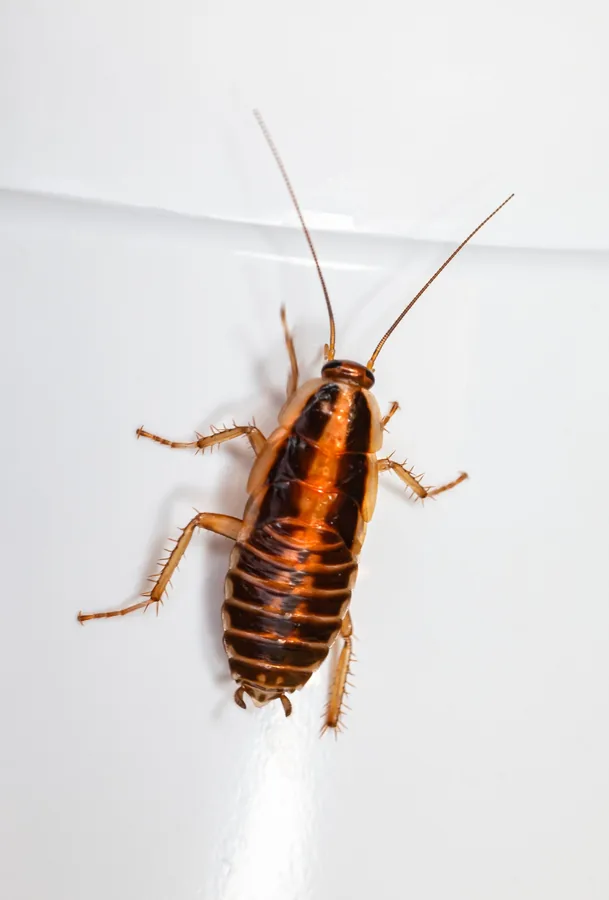
Blattella germanica
- Size
- 1/2 to 5/8 inch
- Appearance
- Light brown to tan with two dark parallel stripes behind the head
- Where you'll find them
- Kitchens, bathrooms, behind refrigerators, dishwashers, microwaves, and inside cabinet voids. The #1 roach found in Central Valley apartments, restaurants, and food-service accounts.
- Why they matter
- By far the most common and most difficult indoor cockroach. A single female can produce 300–400 offspring in her lifetime, and populations can double every few weeks. German roaches are the species most tied to asthma triggers and allergen buildup in homes.
- Signs to look for
- Pepper-like droppings in drawers and under appliances, a musty odor when populations are heavy, small brown egg cases (oothecae) glued into cracks, and live roaches spotted at night when the kitchen light is flipped on.